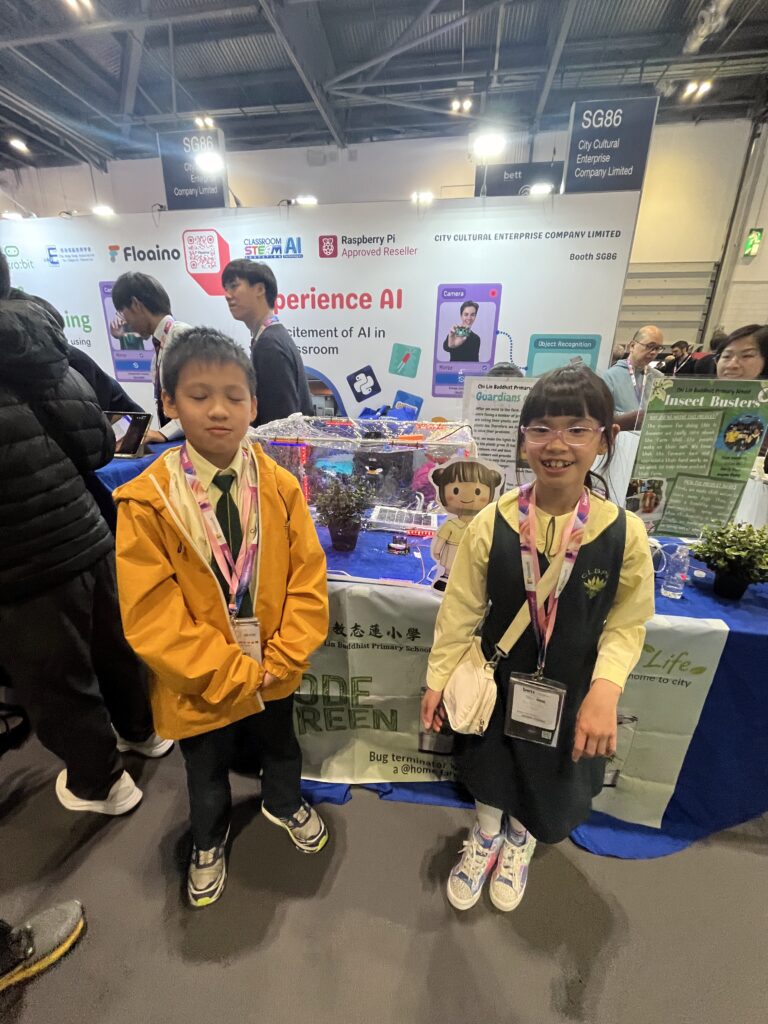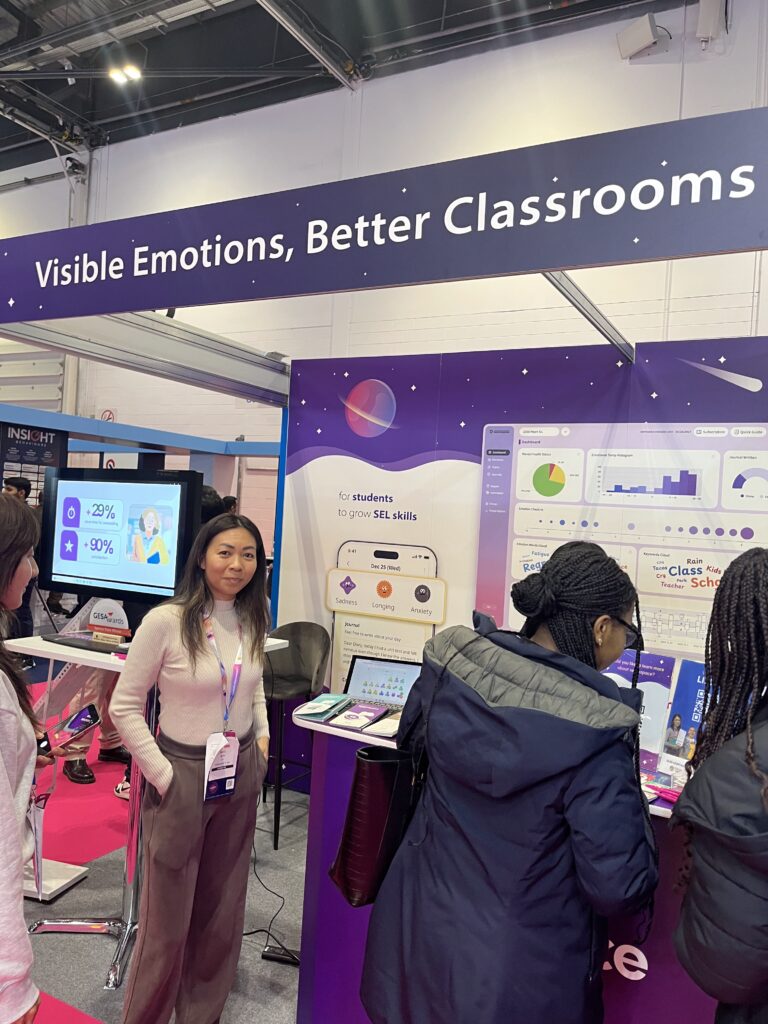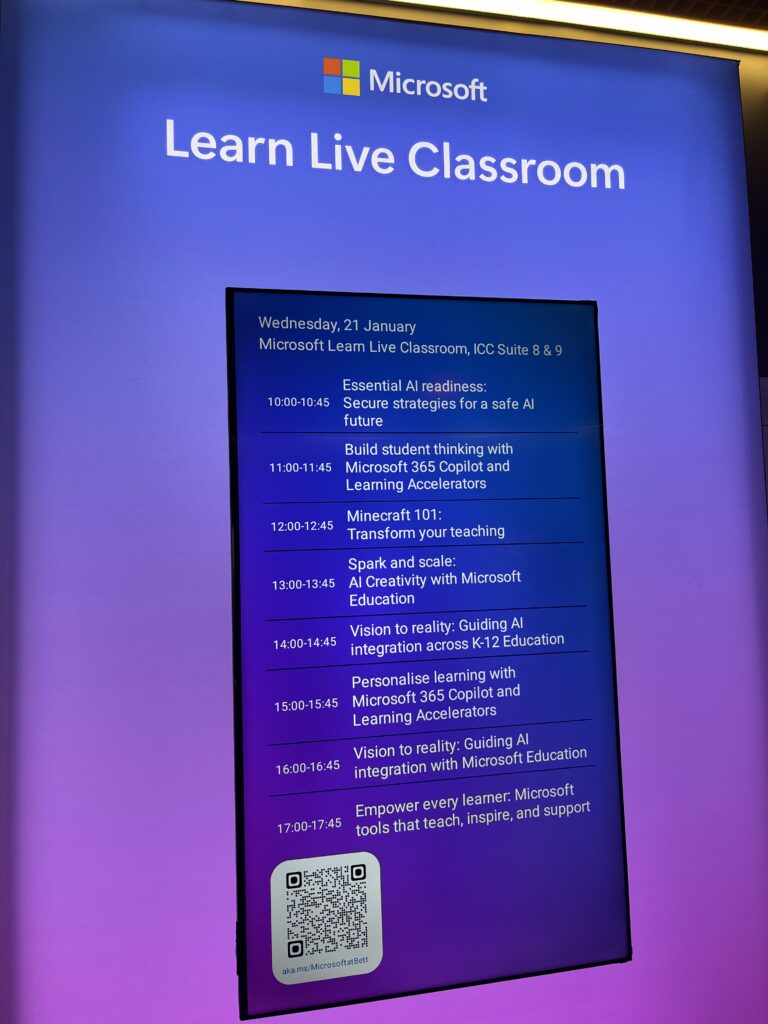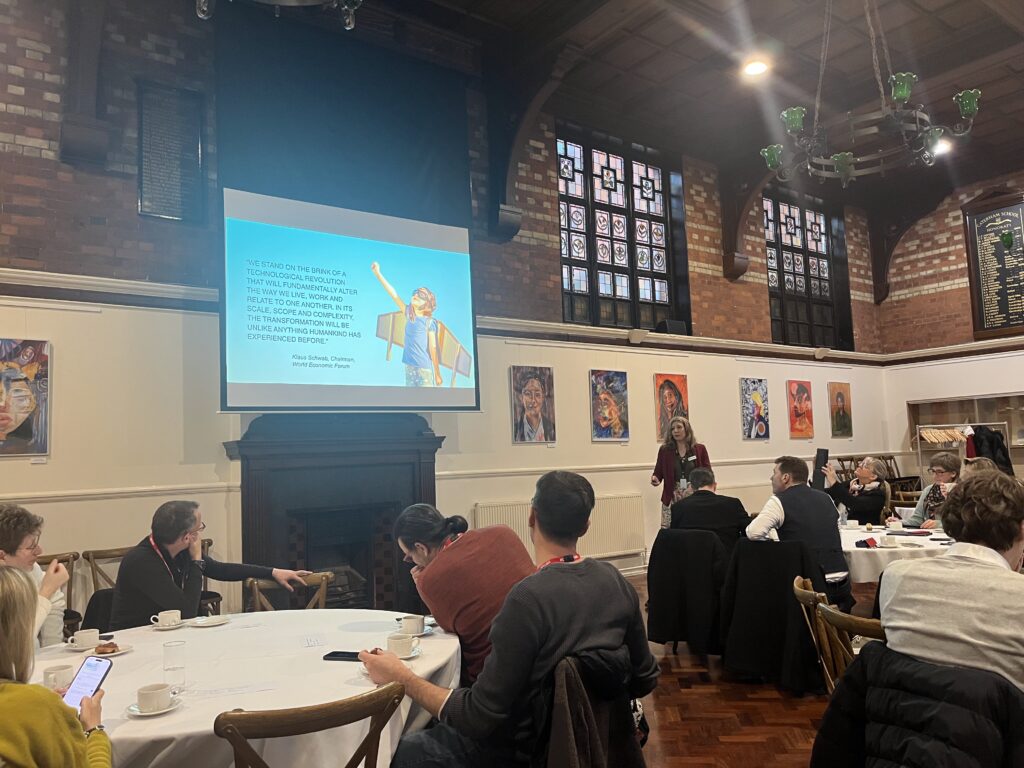



When people talk about educational technologies, the discussion often swings between two extremes: uncritical enthusiasm on one side and deep scepticism on the other. Visiting Bett UK at ExCeL London, one of the world’s largest EdTech fairs, and two Apple Distinguished Schools, offered a more grounded perspective. What emerged was not a story about gadgets replacing teachers, but about intentional use of technology to support learning, creativity, and human interaction.
Bett UK: A Global Snapshot of Educational Technology
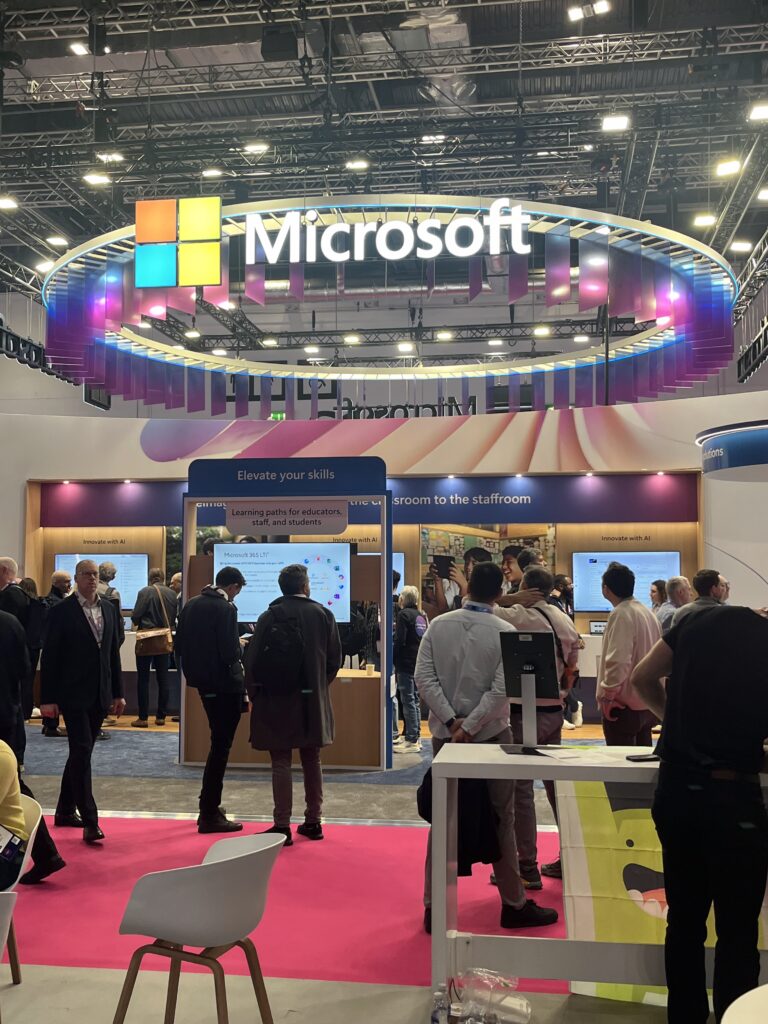
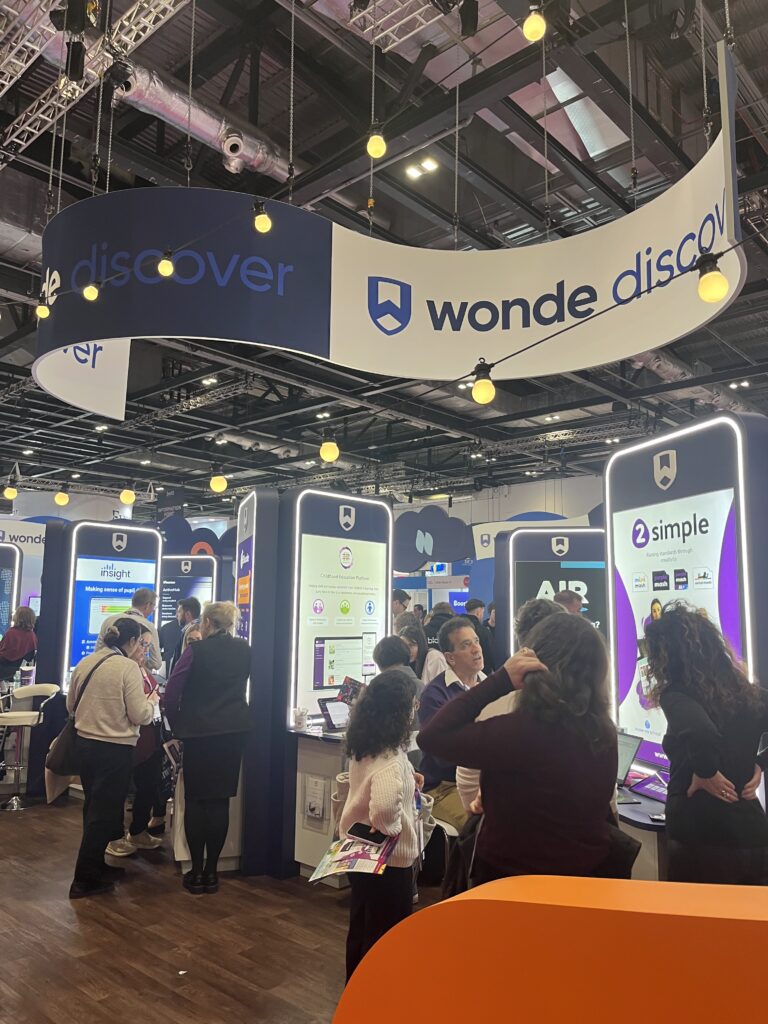
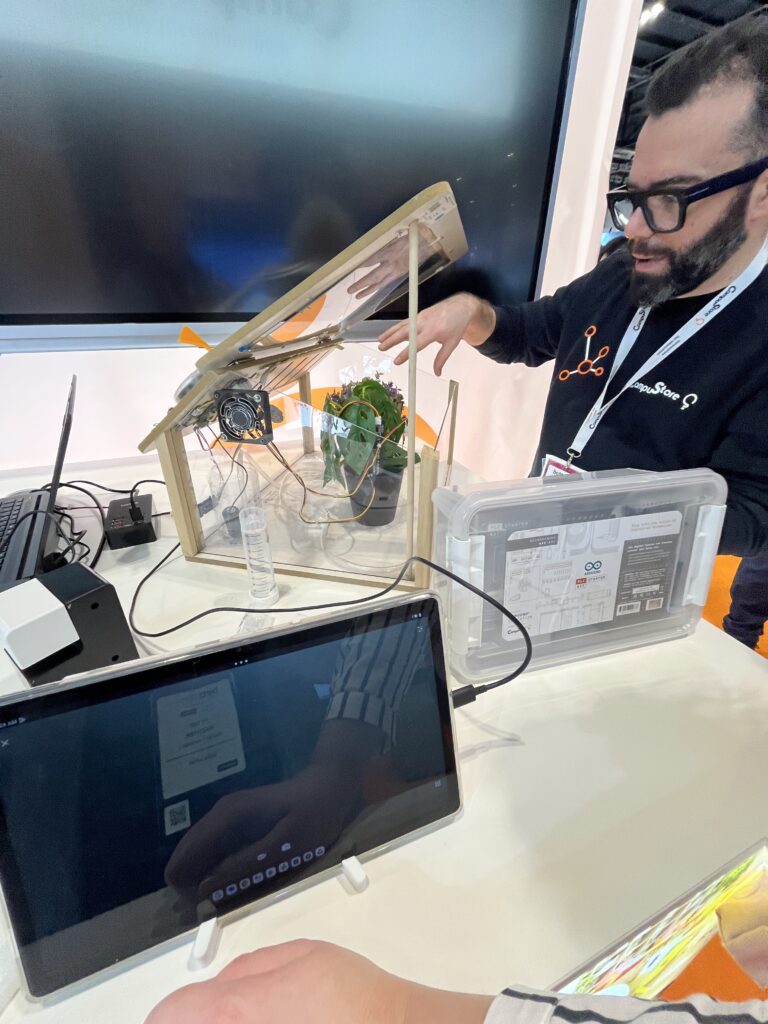
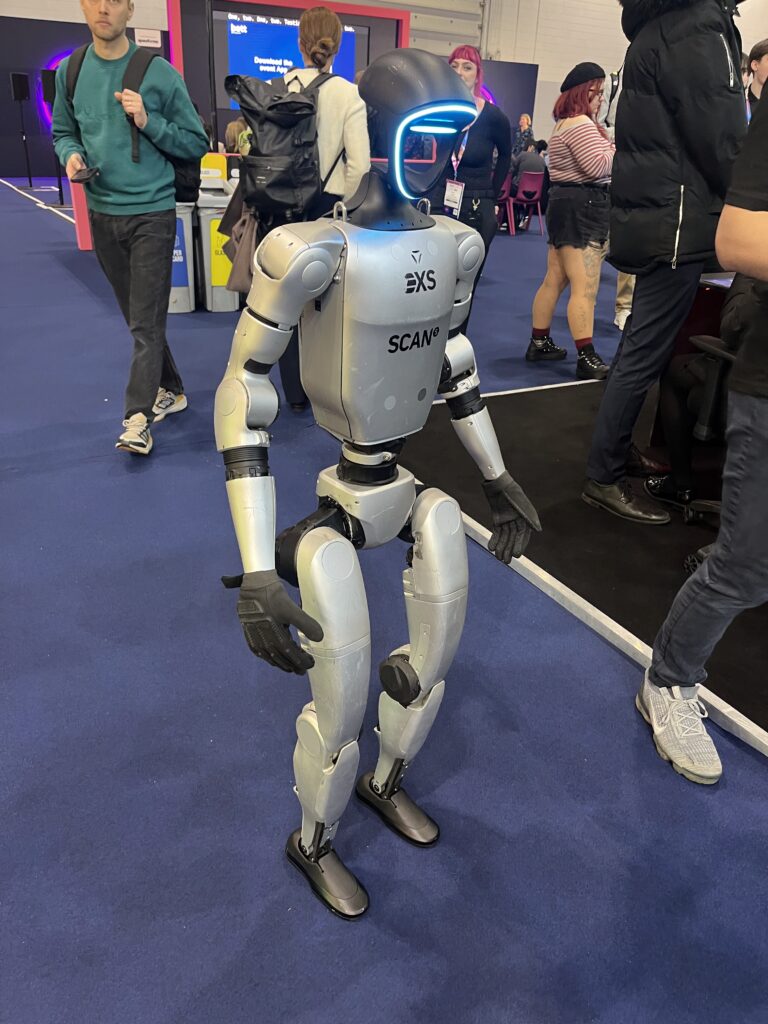
Bett UK brings together thousands of educators, school leaders, policymakers, and technology providers from around the world. One striking feature of this year’s exhibition was the strong presence of companies from the United States and Asia, particularly in areas such as artificial intelligence, data-driven learning platforms, robotics, and digital infrastructure. European companies were present as well, but the innovation momentum clearly reflects where most EdTech investment is currently flowing.
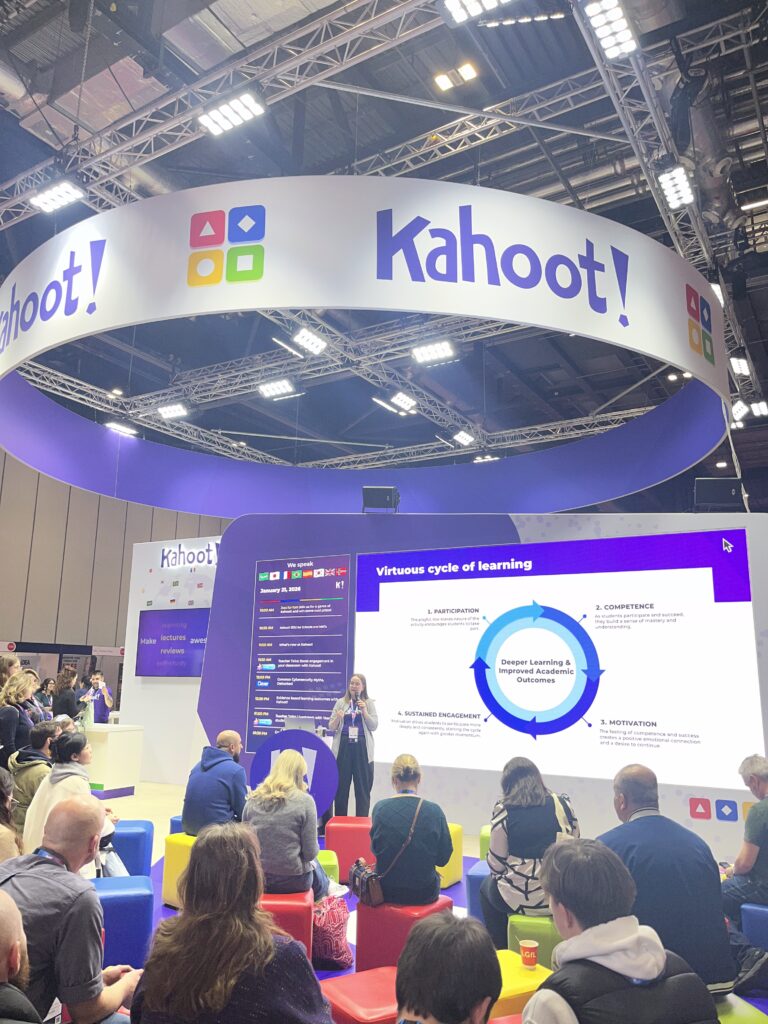
Beyond the exhibition floor, Bett UK is also a three-day forum of discussions and presentations. These sessions consistently returned to the same core question: How can technology improve learning without undermining the role of the teacher?
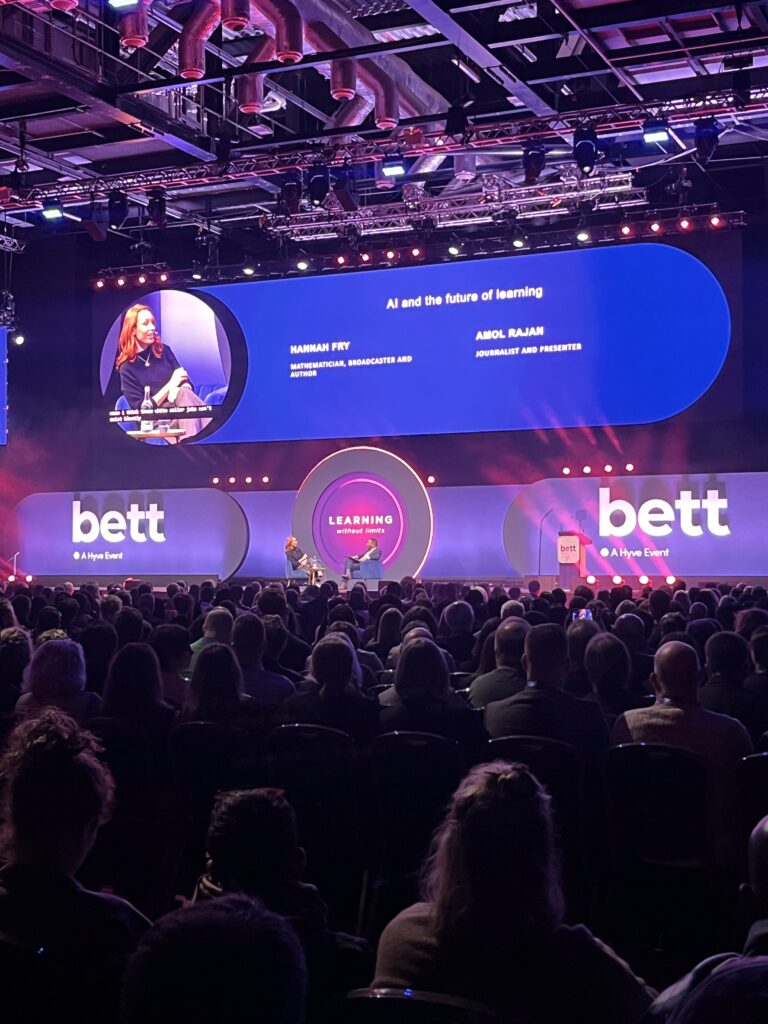
A strong opening moment was a keynote discussion with Hannah Fry, mathematician and science communicator, who addressed AI in education with a clear message:
Artificial intelligence will not replace teachers.
Instead, it can take over repetitive and administrative tasks, helping educators focus on what matters most – individual support, mentoring, and meaningful interaction with students.
Learning by Doing: Google and Microsoft Model Classrooms
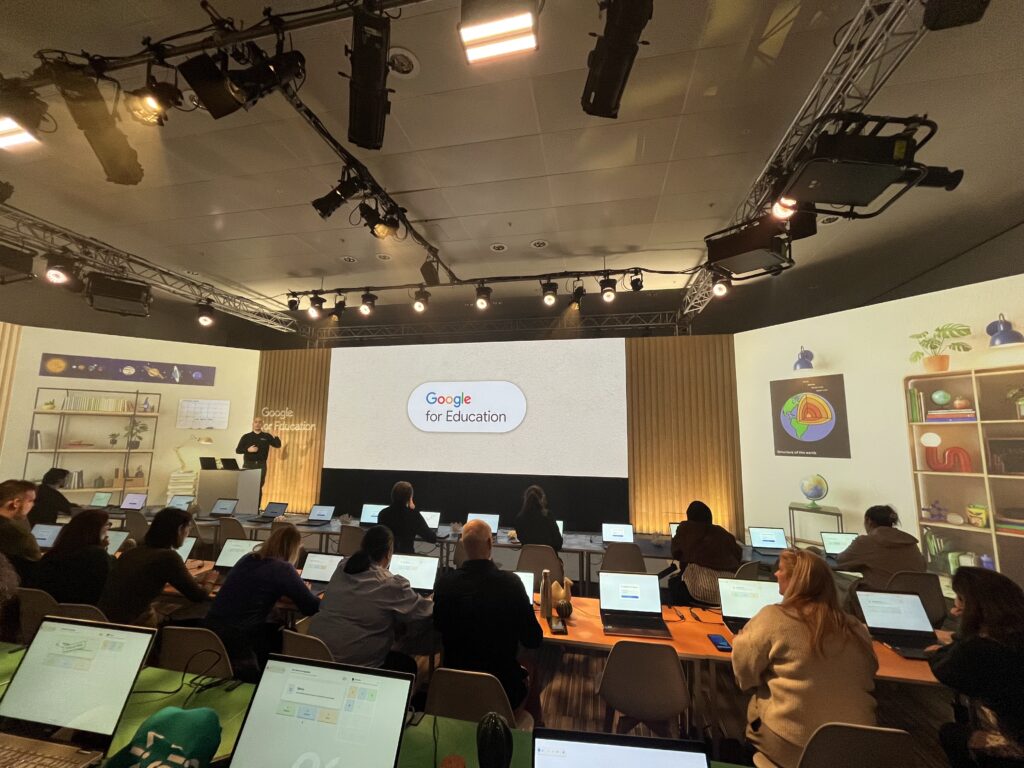
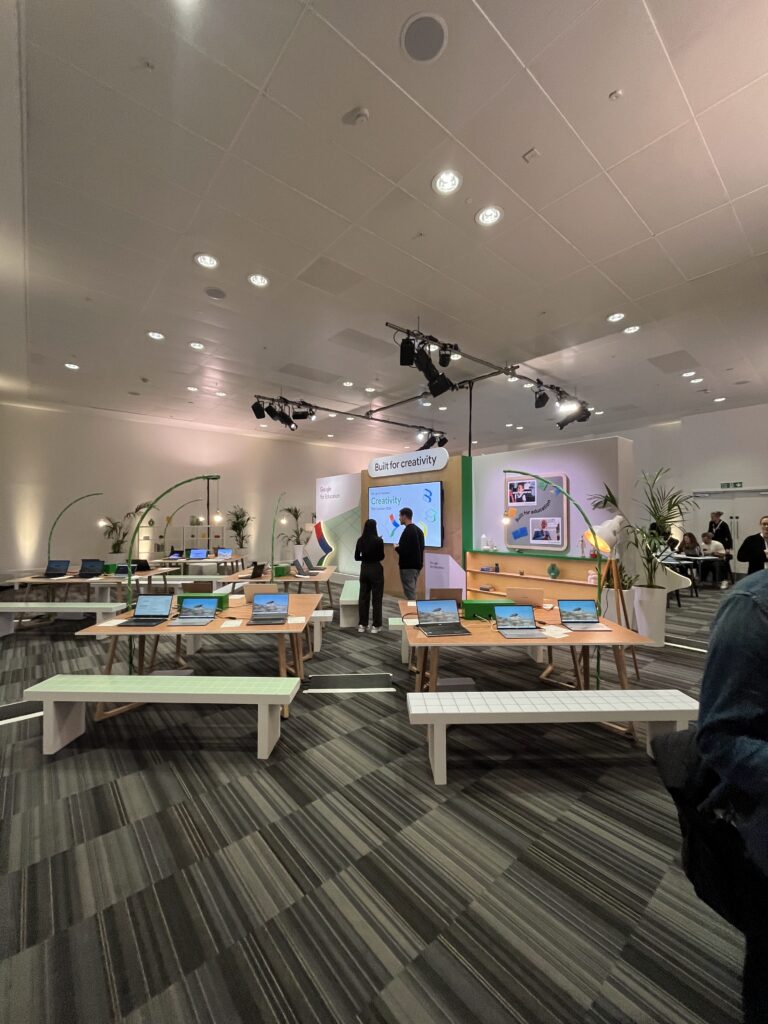
Rather than simply demonstrating products, Google and Microsoft built full model classrooms at Bett UK. Visitors could experience educational technology from two perspectives: first as a teacher designing learning activities, and then as a student completing them.
Personally, I explored Google’s NotebookLM, an AI-powered environment for managing learning resources, notes, and tasks. Its strength lies in clarity and usability: it helps structure content, summarise materials, and support learning without overwhelming the user. Tools like this show how AI can become a learning assistant, not a shortcut around learning.
Visiting Apple Distinguished Schools: Technology as a System, Not an Add-On
At the invitation of Apple, we visited two schools that are part of the Apple Distinguished Schools (ADS) network:
- Woodberry Down Community Primary School (London, Hackney)
https://www.woodberrydown.hackney.sch.uk/ - Caterham School, a private secondary school
https://www.caterhamschool.co.uk/
The ADS programme recognises schools that demonstrate innovative, systemic use of Apple technologies to support teaching and learning. According to Apple’s programme framework, these schools act as centres of leadership and educational excellence, integrating technology deeply into curriculum design, collaboration, and creativity.
Different Schools, Different Contexts
The contrast between the two schools was striking:
- Woodberry Down Primary School educates around 700 pupils with approximately 23 teachers.
- Caterham School serves roughly 1,000 students with about 120 teachers, reflecting very different staffing models and learning environments.
Despite these differences, both schools share a core principle: technology is not an accessory, but part of the learning infrastructure.
No Textbooks, No Workbooks – But Not No Structure
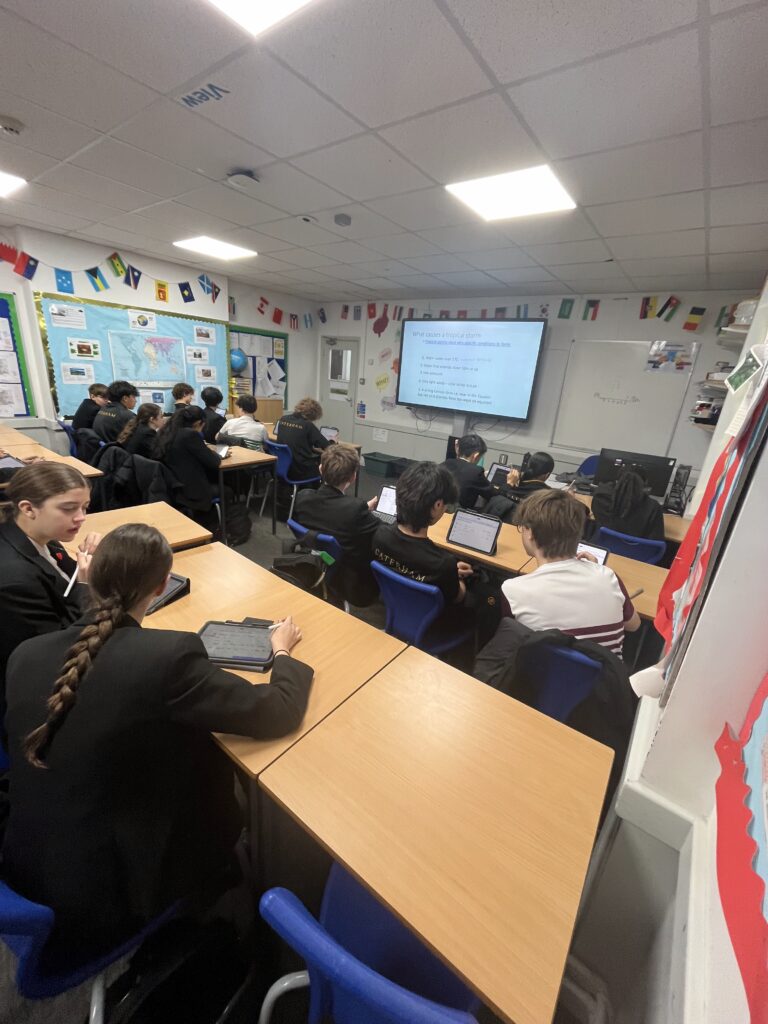
In most subjects, traditional textbooks and paper workbooks are not used. Instead, pupils and teachers work almost entirely on iPads, using Apple’s educational ecosystem, including Apple Classroom, which allows teachers to distribute resources, assign tasks, monitor progress, and guide classroom activities in real time.
Importantly, this does not mean chaos or unstructured learning. On the contrary, everything is carefully designed and intentional. Technology serves a specific learning purpose – not engagement for its own sake, and not simply because devices are available.
Teachers have professional autonomy. There is no single top-down prescription of which tools must be used. Educators decide which technologies support their subject, their students, and their teaching style.
Differences Even Within a Digital School
Even within the ADS network, practices differ:
- Not every teacher is an Apple Distinguished Educator (ADE).
- At Caterham School, for example, students often use Microsoft OneNote for note-taking.
- Examinations are still handwritten, with results uploaded digitally afterwards.
This hybrid approach reflects an important insight: digital transformation does not mean abandoning proven practices, but integrating them thoughtfully.
Screen Time: Consumption vs Creation vs Learning
A recurring theme, visible even in the visual materials at Bett UK, is the distinction between types of screen use:
- Occupy: passive consumption (videos, scrolling, games)
- Activate: interaction, exploration, basic creation
- Challenge: deeper creative and collaborative work
Modern technology should move learners up this ladder, from consumption towards creativity and problem-solving. The question is not how much screen time students have, but what they do with it.
Technology in the Maths Classroom
Concrete examples from mathematics teaching included tools such as:
- OneNote for structured thinking and reflection
- Nearpod for interactive lessons
- Desmos, GeoGebra, Autograph for dynamic graphing and visualisation
- Plickers for rapid diagnostic questioning
- Dr Frost Maths for practice, assessment, and feedback
These tools are not used randomly. They support specific cognitive goals: conceptual understanding, feedback, and formative assessment.
Digital Independence Is Taught, Not Assumed
A powerful insight from both schools was this:
Digital independence is not assumed – it is taught.
Students may be digital natives, but that does not mean they know how to use new tools effectively. Clear structures, modelling, and expectations are in place. Pupils are explicitly taught how to work with digital tools, not just given access to them.
AI in Education: Keeping the Human in the Process
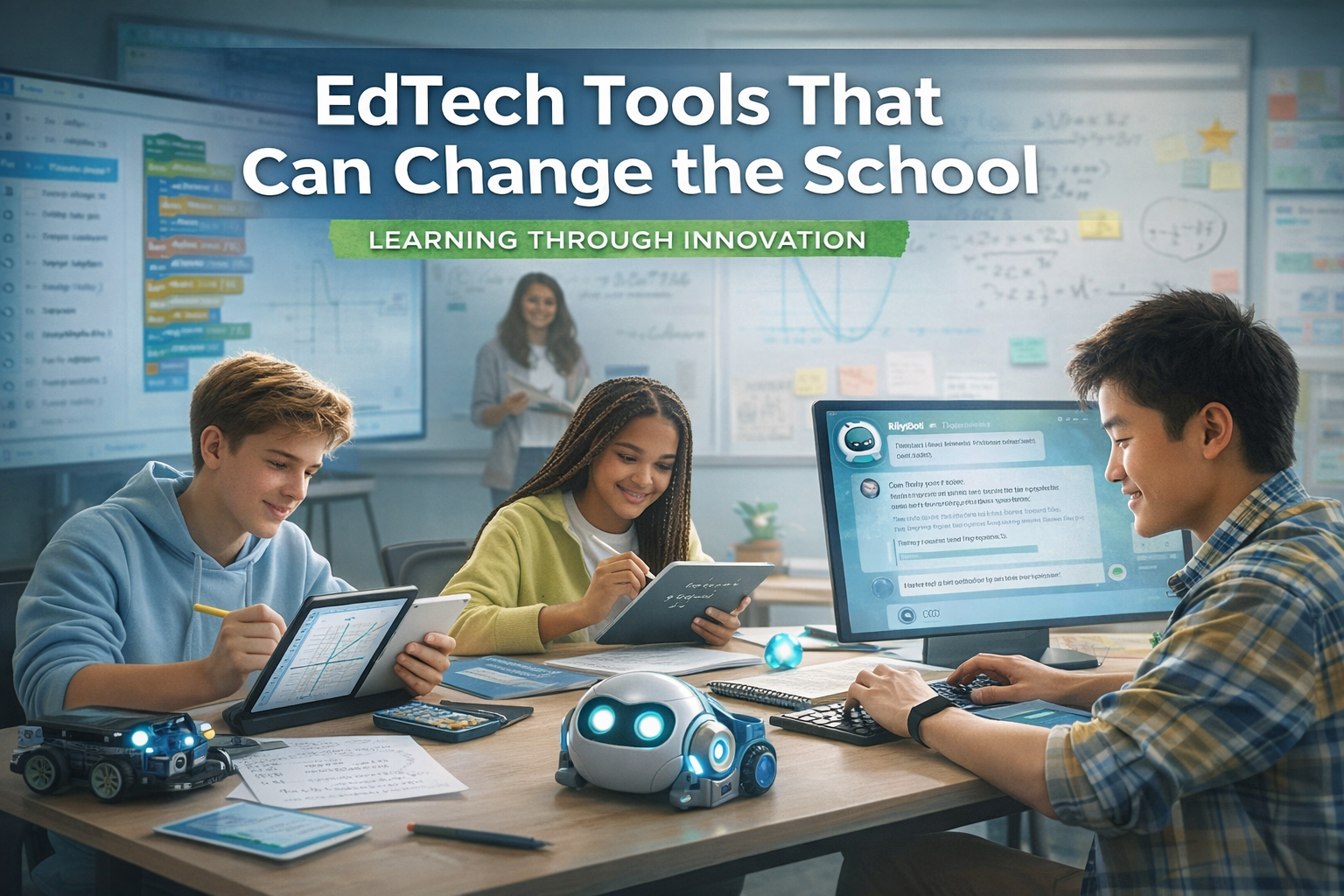
One of the most interesting examples of AI use was RileyBot, a chatbot designed not to provide answers, but to guide students step by step towards solutions. It supports co-authoring and transparency: the student remains the author of the work.
RileyBot also includes safeguarding features and emotional awareness. If a learner shows signs of stress, the system responds with encouragement and motivation. In subjects like A-level psychology, it functions as a study buddy rather than a shortcut.
The underlying goal is clear:
AI should keep the human in the process.
Students should become critical, demanding thinkers, not passive users of automated answers.
Conclusion: Smart Use, Not Blind Adoption
What Bett UK and the Apple Distinguished Schools ultimately demonstrate is this:
modern technologies should not be rejected – but they must be used wisely.
When technology is intentional, pedagogically grounded, and teacher-led, it can genuinely enhance learning. When it replaces thinking, structure, or human connection, it fails.
The future of education will not be decided by devices alone, but by how thoughtfully we choose to use them.